Listen up outdoor adventurers! Are you planning an epic expedition in the near future? Need some extra cash to help get your journey off the ground? Outside magazine is here to help!
Outside is seeking submissions for its 2013 Adventure Grant and is looking for one bold adventurer to give $10,000 to. To enter, all you have to do is click here and fill out the online form. It includes the usual information such as your name, address, and so on. You'll also be asked to write a brief (500 words or less) essay about what kind of adventure you have planned and share a photo of yourself or your team. Finally, you'll need to create a brief video, no longer than two minutes, that expresses your passion for whatever your adventure may be. Upload that video to YouTube or Vimeo, and you're all set to go.
Deadline for submissions is June 1, which means you don't have a lot of time to get everything you need together. Once the deadline passes, Outside editors will pick their finalists and those videos will be posted online where readers can vote for their favorites. Last year, readers selected Daniel Alvarez as their winner. The 31-year old from Tallahassee, Florida went on an amazing kayaking journey that began in Minnesota, followed the Mississippi River to the Gulf of Mexico and then continued along the coast until he reached the tip of the Florida Keys.
This is a great opportunity for anyone to find some funding for their big adventure. Be creative, pitch your idea well and who knows, we may just be reading about you in the pages of Outside next year.
Fat bike, meet La Ruta de Los Conquistadores.
Si, the famous Costa Rican race that climbs over 20,000 feet in three
days. That bisects Central America from west to east. That transverses
jungles, crawls up a volcano to 10,000 feet, is more pocked than a WWI
minefield, and that begs for a full suspension 29er, or 27.5. What is
doesn’t beg for is going fully rigid on a fat bike, four-inch-wide
rubber sucking the mojo out of ever freewheel cruise on the flats.
Unless you’re Will Muecke and his buddies at Team CoreCo.
Muecke is an equity investor based in Costa Rica, with his company
closely devoted to Costa Rican causes, from community health concerns to
funding the only bottle-to-bottle PET (plastic) recycling plant in
Central America. And how does that add up to riding a fatty so far from
snow and sand?
The short answer is that it doesn’t.
The long answer is that Muecke, an American, got the desire to race
the Iditadrod Trail Invitational, or ITI. Muecke is fit enough; he’s a
La Ruta veteran and a masters-level rower, but you have to qualify for
the ITI, which meant being in Alaska this past January. No sweat, he did
that, qualified for ITI, and in the process got hooked on fat bikes and
especially training on them so he’s ready to race the 2014 ITI.
And since nothing is better for training to race than racing, Muecke,
who apparently has some influence in the Costa Rican race scene,
managed to convince La Ruta organizer Roman Urbina to open a fat bike
category for this coming October’s event.
You’d guess going fat would be grueling, but Muecke claims otherwise.
“Getting back from Alaska, I rode my typical mountain bike routes on
the fattie as just good training, but as the routes got more technical
and the terrain steeper I discovered a couple of things.”
 Muecke says his Alaskan-made Fatback tips the scales at 30 pounds,
nine pounds heavier than his Niner Jet 9. “But the wide footprint
provides tractor-like traction in loose and super-steep climbs. On
pitches where I would normally walk, I had better climbing power and
could spin my way up and through the crux sections of the climb without
ever breaking rhythm.”
La Ruta is well known for its soul-crushing climbs; most racers, even
the pros, find themselves walking, but Muecke says with a 22-tooth
granny in front, he has enough torque for nearly every ascent; the only
adaptation was to switch from a double to triple up front so he has more
power on the molasses-slow flats.
Whether the category will grow is another story. Muecke is
noncommittal, but running a fat bike in La Ruta is drawing a lot of
publicity, both to the idea and to CoreCo’s causes, and that’s
motivation for Muecke and his growing team of six fat-bike riders to
keep at it.
Muecke says his Alaskan-made Fatback tips the scales at 30 pounds,
nine pounds heavier than his Niner Jet 9. “But the wide footprint
provides tractor-like traction in loose and super-steep climbs. On
pitches where I would normally walk, I had better climbing power and
could spin my way up and through the crux sections of the climb without
ever breaking rhythm.”
La Ruta is well known for its soul-crushing climbs; most racers, even
the pros, find themselves walking, but Muecke says with a 22-tooth
granny in front, he has enough torque for nearly every ascent; the only
adaptation was to switch from a double to triple up front so he has more
power on the molasses-slow flats.
Whether the category will grow is another story. Muecke is
noncommittal, but running a fat bike in La Ruta is drawing a lot of
publicity, both to the idea and to CoreCo’s causes, and that’s
motivation for Muecke and his growing team of six fat-bike riders to
keep at it.
Last week, Sally Jewell—former CEO of REI—took the helm as the new
Secretary of the U.S. Department of the Interior. This is great news for
everyone who likes to hike, bike, run, ski, fish, paddle, climb, or
explore the outdoors in any way. Why you should care? I’ll tell you.
The Department of the Interior, or DOI, oversees 500 million
acres—approximately 20 percent of America, including our national parks,
national wildlife refuges, Bureau of Land Management lands, and more.
How many times have you enjoyed an adventure on these lands? I bet many!
Secretary Jewell is now in charge of managing these, as well as the
department’s 70,000+ employees. Suffice to say, it’s a pretty big job.
As with any political office, the Secretary of the Interior faces a
delicate balancing act, juggling many interests. This is why we’re so
pleased to have one of our own in this important position. Under
Jewell’s watch, the DOI is poised to recognize outdoor recreation as a
leading use of public lands—one that creates tremendous economic value.
The DOI website summarizes their mission this way: “The U.S.
Department of the Interior protects America’s natural resources and
heritage, honors our cultures and tribal communities, and supplies the
energy to power our future.”
Notice that last part, about supplying energy to power our future.
It’s been a pretty big focus of the DOI over the years, which is all
fine and good. Of course we should harvest our nation’s energy
resources. After all, DOI lands are rich with oil and gas resources that
generate significant revenue for the government while also providing
domestic energy for our growing population.
The trouble is, until recently, no one has given much more than a
passing glance to how important outdoor recreation is to our economy.
But by paying heed to the first part of the mission—protecting America’s
natural resources and heritage—we can support a heck of a lot of jobs,
and good-paying sustainable jobs at that—in technology, product design,
manufacturing, sustainability, retail, global commerce, public land
management, and more.
With Jewell in charge of the DOI, we are better positioned to spread
the message that our nation’s public lands and waters are foundational
to outdoor recreation and the economy.
Jewell brings a plethora of great experience to the table. As CEO of
REI, she managed a $2 billion company that is as committed to protecting
outdoor recreation experiences as it is to making and selling great
products. Before that, she worked as an oil and gas engineer and
financier. Wow. What a combo! It’s not often that we get a DOI official
with such a broad and unique perspective. She has the chops to
understand the opportunities and challenges facing the DOI, particularly
as recreation lands are disproportionately targeted for budget cuts.
Jewell’s appointment is a big deal because it shows that leaders in
Washington are starting to get it. Like Senator Wyden said during
Jewell’s confirmation hearing: “The economics of public lands have
changed. Recreation has become a big business, and it will be good for
the economy if it grows bigger. To do that, the department will need to
give more attention to the opportunities that recreation on public lands
provides for businesses than it has in the past.”
Outdoor recreation resources are renewable and can continue to
sustain economic dividends for years to come. Just what sort of
dividends? I’m talking about the $646 billion in consumer spending
that outdoor recreation generates each year. And 6.1 million
sustainable American jobs (more than twice as many as the oil and gas
industry). And nearly $80 billion in annual tax revenue. These are big
numbers. And they deserve significant consideration when choosing how to
manage our public lands and waters.
When people play outside, their spending goes right back into the economy.
Explorer Julian Monroe Fisher has completed Phase Two of his ambitious RailRiders 2012-2016 Great African Expedition,
traveling overland through remote regions of that continent.
Fisher
began the journey in Juba, the capital of South Sudan back in January
and followed the same expeditionary route taken by Sir Samuel White
Baker and his wife Lady Florence Baker back in the 1860's. The route
eventually took him across the border into northern Uganda, following in
Baker's footsteps to the shores of Lake Albert.
This phase of the expedition follows a successful launch of the project
last spring during which Fisher traveled overland from Cairo, Egypt to
Khartoum, Sudan. Traveling solo, the anthropologist began his study of
the Ethnographical make-up of parts of Africa. The plan is to compare
the modern day dispersal of local tribes with historical records from
the 19th century with similar data.
During Phase Two, Fisher was joined by British photographer and
documentarian Jon Maguire as he traveled north out of Juba into the
realm of the Mundari tribes. From there, the two men turned southeast,
traveling into the Eastern Equatoria region of South Sudan. Next, their
route carried them across the border into northern Uganda, where they
were joined by David Baker and his daughter Melanie. David is the
great-great grandson of Sir Samuel Baker, and together the group trekked
to the location where the famed explorers became the first European to
set eyes on Lake Albert. Marking the exact GPS coordinates of that
point, Fisher was later able to provide the Ugandan government with the
precise location, something they intend to use to promote the spot to
travelers.
Fisher and Maguire now intend to make a documentary of their travels
through South Sudan, which remains the planet's newest nation. Few know
much about the country and its troubled history, and it is possible the
film will give many of us our first glimpse into life in that country.
Phase Three of the expedition will follow the Kagera River through
Burundi, Rwanda and Tanzania before making a circumnavigation around
Lake Victoria. The start of that phase of the expedition has yet to be
announced.

One of the top adventure travel experiences for anyone who wants to
experience the Himalaya is a trek to Everest Base Camp. The trip takes
about two-weeks round trip and really immerses you in the landscapes and
culture of Nepal along the way. Take it from me, I did this trek a few
years back and absolutely loved it. Later this year, you can make that
trek too and raise funds for a local orphanage in the process.
Non-profit organization Kids of Kathmandu has joined forces with adventure travel company Discover Outdoors to create a unique fund raising experience. Those looking to participate in the trek
have two options. They can simply pay $2995 ($2895 if you register
before April 30) to join the group or commit to raising $9000 for the
Kids of Kathmandu. If that goal is reached, the cost of the trip is
covered and the cash raised will go to support a very important project.
And what exactly is that project? KoK is looking to improve the quality
of life in an orphanage in Bhaktapur by installing solar panels that
will help provide power there. Anyone who has ever been to Nepal has
probably experienced the rolling blackouts that are common there but by
installing solar panels they hope to alleviate the downtime and provide
the children living in this orphanage with electricity . The travelers
who join this trek will also pay a visit to the orphanage so they can
meet some of the children they're helping personally.
The trek is scheduled to take place September 26 - October 13 of this year. To find out more and to sign up, click here.
The Himalaya, Everest Base Camp and a good cause? Sounds like a perfect adventure.

Skydiver Felix Baumgartner, aka The Man Who Fell To Earth, has been named the winner of the National Geographic 2013 People's Choice Adventurer of the Year. The award is given as a result of an online poll conducted of visitors to the National Geographic website over a two-month period running from November to January. Baumgartner edged out nine other very worthy candidates to earn this distinction after making a historic skydive last fall.
Felix gained worldwide attention last October when he rode a specially designed high altitude balloon up to the edge of space. When his capsule was approximately 39 km (24 miles) above the Earth, he stepped out and proceeded to free fall through the atmosphere. On the way down, he managed to become the first person to break the sound barrier with out an aircraft, reaching speeds in excess of 1357 km/h (843 mph) in the process. He also set a record for the highest ever skydive with his jump starting at an impressive 38,969 meters (127,853 ft).
As impressive as this feat was, Baumgartner did have some good competition for the title of People's Choice Adventurer of the Year. Some of the other candidates included kayaker Steve Fisher, who completed the first descent of the world's largest rapids on the Congo River and climber David Lama, who free climbed Cerro Torre along the 1097 meter (3600 ft) Southeast Ridge. Ultrarunner Lizzy Hawker was also amongst the finalist for her fifth win at the famed Ultra-Trail du Mont-Blanc and explorer Mike Libecki received the nod for this efforts to continually fill in blank spots on the map.
I have to say that I'm not surprised that it was Felix that went home with the title. After all, he probably received the most press of any of the candidates. His skydive, which was broadcast live over the Internet, held us all spellbound and it was amazing to watch him fall from such great heights. Congratulations to him and his entire support team for earning this honor. Definitely well deserved.

March 1st passed with President Obama and Congress failing to come up with a new budget plan before midnight. The Sequestration process has now kicked in, making automatic cuts to the government's budget across the board. These deep cuts are going to have an impact on a number of services and programs that we'll likely be dealing with for weeks and months to come.
One of the most visible places where you'll notice sequestration having an immediate and direct impact is in America's national parks, which will now be forced to cut hours of operation, close visitor centers and cut jobs in an effort to meet the new budget demands.
Amongst the cuts that have already been made public are delayed openings for Yellowstone, Yosemite and parts of the Grand Canyon this spring. In the Grand Tetons, the Jenny Lake Visitor Center, the Laurance S. Rockefeller Preserve, and the Flagg Ranch Visitor Contact Station will all be closed for the summer. On Mt. Rainier the Ohanapecosh Visitor Center will also be shuttered, while in Denali the Eielson Visitor Center will see a delayed opening this spring. The National Park Service has even announced that five campsites inside the Great Smokey Mountains National Park will be closed for the year as well. Considering that is the most visited park in the entire system, it is sure to have an impact on visitors.
This is just the tip of the iceberg however and there are sure to be many similar reductions in service across nearly all the national parks. The dedicated staff at those locations will work hard to minimize the impact on travelers, but it many of the cuts will simply be too large to ignore. If you're planning on visiting a national park in the near future, I'd recommend checking ahead to see what impact the sequestration process is going to have on that particular park. I'd hate to have someone arrive at their destination, only to find that the park isn't open yet or some key services were not being offered.
It's a shame that it has come down to this, but this is economic climate we live in right now. Lets hope it all gets sorted out soon.

On May 1, 1963 Jim Whittaker became the first American to summit Mt. Everest. His successful expedition was a result of months of preparation and weeks of hard work in the Himalaya that culminated with him reaching the highest point on the planet. Back then, Everest was a very different place than it is today, something that Whittaker reflects upon in an Op-Ed piece that he wrote for The Seattle Times that was published over the weekend.
In the article Whittaker talks about the massive changes that have come to the mountain since he made his historic climb five decades ago. He mentions that when he climbed Everest his team had to hire 32 Sherpas and 909 porters just to help get all of their gear and supplies to Base Camp, which was a 100-mile (160 km) trek back in those days. Today, a short flight puts you into the Khumbu Valley, making the walk in a mere 40 miles (64 km).
That isn't the only change however. Whittaker laments the fact that the crowds on Everest have grown so large, with some climbers lacking the proper skills, training and experience to take on such a massive peak. Whittaker's son Leif made his second ascent of Everest last year and we're told he had to wait at 28,700 feet (8747 meters) for more than an hour thanks to the traffic jams going up and down the mountain. The elder Whittaker feels that those crowds could be a disaster waiting to happen should extremely bad weather move in unexpectedly.
As we get closer to the start of new season on Everest I expect we'll see more pieces like this one. The 50th anniversary commemoration will no doubt also bring other media attention to the current climate for climbing on the world's tallest peak. But I doubt any of them will be written by anyone who has the same unique perspectives of Whittaker who really has seen the mountain evolve and change since he stood on top. This is definitely an interesting read from a man who knows what he is talking about.

One of the biggest upcoming expeditions that I have been anticipating is the first-ever winter crossing of Antarctica led by Sir Ranulph Fiennes. The 3200km (2000 mile) journey would test even the heartiest of explorers, exposing them to temperatures as cold as -90ºC/-130ºF as they battled incredibly high winds and massive snow storms in what some consider the most challenging polar adventure left to do. Today we learned however that Fiennes has now been forced to pull out of the expedition after contracting severe frostbite while training.
Fiennes and his teammates have been in the Antarctic for several weeks now, putting the final touches on their preparations to launch their trans-continental trek. He and his companions were on a training exercise when Fiennes took a spill, damaging his ski bindings in the process. The famous explorer than proceeded to remove his gloves to fix the bindings in -30ºC/-22ºF temperatures which caused the frostbite. He is now waiting evacuation from the Antarctic to return to South Africa to receive treatment.
This isn't the first time that Fiennes has had to deal with frostbite. The veteran polar explorer has contracted it in the past on his numerous expeditions to the cold regions of our planet. In 2000, while traveling solo to the North Pole he had to be evacuated for the same reason. It was not long after that that he famously amputated his own finger tips to remove the necrotic area after his doctor urged him to wait until they were more fully healed. It is likely that that incident had an impact on him contracting frostbite once again.
The rest of the team is still proceeding ahead with their plans. They will depart on the Antarctic crossing on March 21 with several members of the team on skis, while others drive support vehicles behind them. We'll be able to follow their progress at the Coldest Journey website.
The BBC article linked to above indicates that Fiennes is absolutely devastated that he won't be able to join the team on this trek. Some believe that he saw this as a possible swan song to his career, capping an already impressive resume with one last grand adventure. Unfortunately that isn't going to happen. As soon as the weather clears, he will be on a plane back to South Africa.

Are you the kind of person who spends more time cooking over a campfire or backpacking stove than you do in your own kitchen? If so, there is a new website you'll definitely want to checkout and add to your bookmarks. It's called CampingRecipes.co and it is sure to become a popular resource for the outdoor crowd.
As you would expect from an online cooking site, Camping Recipes has a database filled with all kinds of suggestions for things to eat while out on the trail. It features hundreds of suggestions for healthy and tasty snacks and meals for when you're out on the trail. It even features full meal plans designed to provide plenty of calories for extended trips.
The site offers a solid search tool for finding new versions of your favorite recipes but it also provides plenty of categories to explore as well. For instance, there are vegan, vegetarian and gluten free options. There are also suggestions for car camping , backpacking and ultralight trekking, as well as recipes that don't require any cooking at all. Camping Recipes provides excellent choices for kids, low carb selections and even gourmet meals for the talented trail chef.
But what really sets this site apart from others is the wealth of information in provides specifically for backpacking. Not only does it provide the full recipe for the meals but it also provides calorie counts too. It also offers an estimated weight for carrying all the ingredients in your pack, which is helpful for those who want to know exactly what they're carrying with them when they hit the trail.
If you're looking to add some new options to your outdoor cooking repertoire, then head over to CampingRecipes.co now. While you're there, sign-up and join the community. You'll be abel to share some of your favorite trail-menu options, interact with others and review recipes.
Now if you'll excuse me, I suddenly find myself very hungry.

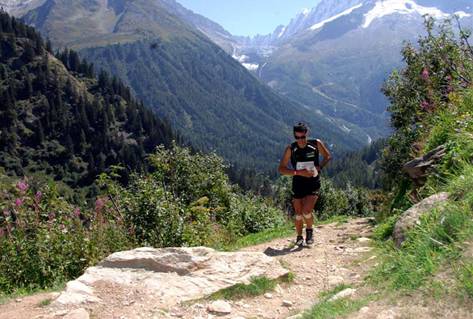
Trail running in one of the most popular and fastest growing outdoor sports in the U.S., so it seems only natural that the first ever conference in North America focused on the sport should take place later this year. The inaugural Estes Trail Ascent is scheduled to take place June 20-22 in Estes Park, Colorado - one of the premiere trail running destinations in a state that is known for its amazing locations for all mountain sports.
The event is tailored for athletes, event organizers and vendors alike, with something to offer everyone. The daily schedule, which is still being completely filled in, will include seminars, speaker panels, a gear expo and of course trail runs – including a 5.9-mile (9.5 km) race that features 1900 feet (579 meters) of elevation gain.
Event organizers will be especially interested in the Event Director College. This first of its kind event will run at the same time as the trail running conference and is designed to give race directors all of the tools they need to focus on and build a quality event. Seminars and panels will share secrets on finding sponsorships, event management, marketing, public relations and more. Managers of successful trail running events across the U.S. will share their wisdom and knowledge that will allow the sport to continue to grow in new areas.
Registration for the Estes Trail Ascent is now open. If you're interested in attending, book your plans now.
It is great to see this kind of event cropping up in the U.S. for the first time. Trail running is popular with outdoor enthusiasts, so its wonderful to see the sport growing to the point that a conference of this type can take place. Estes Park is also a beautiful setting for the event as well and well worth attending just to spend a little time in the area.

An interesting story showed up yesterday. In it, a white-water kayaking guide by the name of James "Rocky" Contos contends that the river that has been previously thought to be the source of the Amazon isn't in fact the source at all. That would mean that all previous attempts to make a first descent of the waterway were starting in the wrong place and the Amazon has yet to be paddled source-to-sea.
Contos says that he made his discovery while using Google Earth to plan some new kayaking routes in Peru. Previously it has been assumed that the Apurimac River marks the furthest starting point of the Amazon, but he believes that its true source sits on the 18,363-foot (5597 meter) Nevado Mismi mountain, where the Mantaro River begins. By Contos' estimates, the Mantaro is approximately 50 miles longer than the Apurimac, giving it the distinction of being the furthest source.
If what Contos says is true, we'll eventually have to re-write the record books on the first descent of the river. As of right now, it hasn't been done. At least not by kayak. Contos shared his findings with West Hansen, who was launching his Amazon Express expedition last year, but the two had a bit of a contentious relationship it seems, which led to Hansen going the historical route and Contos using motorboats to complete a first full descent of what he believes is the Amazon River. The article has more details on the situation between the two men, which seems like it can best be described as frosty.
For now, we have to wait to see if there is independent confirmation of this new finding, which Outside speculates could lead to a rush of expedition paddlers heading to South America to attempt to become the first to run the Amazon from the "new" source to the sea. Regardless if it is proven or not however, I suspect there are some already planning to make the run, just so they can lay claim to it.
We're now just about halfway through the month of February, which means we're far enough into the new year that we should be thinking about our own adventures for the year ahead. Our friends over at The Active Times are here to help with this task, offering their selection for the 30 best new trips for 2013.
The AT broke their list of suggested destinations and activities down into region, offering the best options for Africa, The Americas, Asia, Australia and Europe & The Middle East. Each of their selections in those regions is a wild adventure that is far from the norm and decidedly not for the traveler who likes to sit on the beach watching the world go by. On the contrary, these are active, often demanding, journeys that will be reward adventurous travelers with once in a life time experiences and satisfying cultural, physical and historical encounters.
For instance, one of the options for intrepid trekkers is a 100-mile long hike through Kenya's Tsavao National Parks. The trek takes 11 days to complete and guarantees some memorable animal encounters along the way. Other options include new backpacking options in Patagonia, exploring the Mongolian Steppe on horseback and mountain biking the Himalaya in Bhutan. No matter what activity or destination you love, there are some good suggestions here, most of which will fill your adrenaline quotient while also providing plenty of amazing experience that simply can't be found elsewhere.
Over the past week or two I've been lamenting the fact that I've been home for far too long. Lots of work and a few bumps in the road of my personal life have kept me firmly rooted at by base of operations for far longer than I would like. I'm hoping to change that soon, as the wanderlust is certainly becoming harder to ignore. I see plenty of tempting options on this list for places I'd love to visit and experiences I'd like to add to my travel resume. It's time for me to choose my next adventure. How about you?

Two British adventurers are preparing to set out on one very long and demanding expedition that will see them pass through seven countries, covering more than 4250 miles (6840 km), along the entire length of the Nile River.
Inspired by Ed Staford's record setting walk along the Amazon, Levison Wood and Simon Clarke have dubbed their adventure Walking the Nile. If successful, they'll become the first people in history to walk the longest river in the world from source to sea, and along the way they hope to encourage others to get off their couch and seek adventures of their own.
Their journey will begin in the highlands of Burundi and Rwanda before descending into the thick jungles of Tanzania and Uganda. From there they'll walk along the edge of Lake Victoria before entering the newest country on the planet – South Sudan. Crossing through the largest swampland on the planet, they'll move into North Sudan before passing into the Sahara Desert for the final leg of the expedition in Egypt. Wood and Clarke estimate that it should take them roughly 12 months to complete their adventure.
No date has been announced for the start of the expedition, but presumably you'll be able to follow progress online once they get underway. For now though, you can get a sense of what they are facing in the following video: http://vimeo.com/58469977

Halley VI, a new British Antarctic research station officially opened for business this week, welcoming the first inhabitants for an extended stay. The station, which is located along the Brunt Ice Shelf, just off the Weddell Sea, is designed to monitor the changing conditions and climate in the region. It will be the home for 16 scientists who will reside there throughout the long winter ahead. During the busier summer months, it can house as many as 70.
Built from a set of modular structures that can be easily moved, the Halley VI was designed to be comfortable even in the extreme conditions of the Antarctic. It is rated to withstand temperatures as low as -69ºF/-56ºC and a built-in set of hydraulic legs that can be raised or lowered to help the base withstand heavy snows. Previous research facilities have been crushed under the weight of Antarctic precipitation in the past.
The Halley VI has another trick up its sleeve that can help it survive where its predecessors failed as well. All seven of the interlocked modules can be placed on skis and moved to a different location, which will come in handy when the pack ice that it currently rests on begins to recede further. Considering the Brunt Ice Shelf moves about 700 meters in a given year, and doesn't rest over any kind of permanent ground, the mobility of the station could extend the life of the station greatly.
It has taken four years for the British Antarctic Survey team to complete the construction of the base and for now it will be manned by just a skeleton crew. As the Antarctic winter hits in just a few short weeks, those first inhabitants of the Halley VI will be cut off until the spring. At that time, the station will be resupplied and a full compliment of staff and maintenance crew will arrive on site. Until then, its going to be some very long and lonely days indeed.

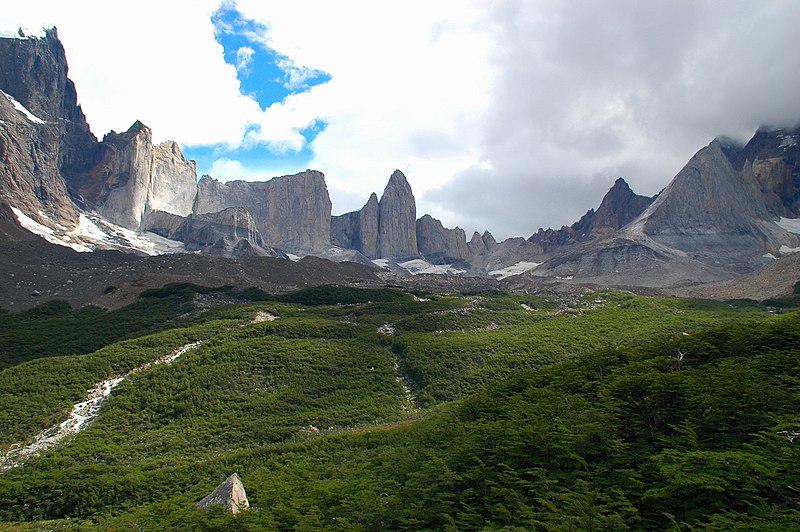
Outdoor athletes looking for a new challenge this year may want to consider the Pantagonian International Marathon, which takes place in Chile's Torres del Paine National Park on September 28. The race, which returns for its second year, promises runners a unique challenge in one of the most beautiful places on Earth while striving to also protect that amazing wilderness.
The 2012 edition of the marathon drew more than 400 racers from 17 different countries and this year's edition looks to do the same. Organizers of the event, who also put together the outstanding Patagonion Expedition Race, offer four different lengths for runners to run. Those lengths include 63k (39.1 miles), 42k (26.2 miles), 21k (13.1 miles) and 10k (6.2 miles).
And oh what a course this is sure to be. Torres del Paine features spectacular mountain vistas, pristine rivers and streams, crystal clear lakes and beautiful glaciers. Each of the routes shares parts of the same trail, which runs through the heart of the national park, giving runners an opportunity to experience this unique place in the best way possible – on foot!
The race isn't just about running through one of the most breathtaking places on the planet however as it also is used to raise awareness of the importance of protecting this magical place. The marathon is run in conjunction with NIGSA, an organization dedicated ensuring the sustainable development of Patagonia, while spearheading conservation efforts to keep the region as pure and untouched as possible.
Registration for the event is now open with early-bird discounts running through the end of the month. This is an opportunity to run a marathon (or longer!) in a place that many consider to be the last great wilderness on Earth. And while you're there, race organizers are also offering some great add-ons to help you enjoy the place even more. For example, you can go kayaking on the Strait of Magellan, tracking Vicuna in a conservation park or trekking in the Karukinka and Darwin Mountain Ranges. These options allow you to add even more adventure to your trip.
Sound like fun? Better get training now!
 I was pleased to see that the UK Children's charity, Comic Relief, were recently tasked with negotiating the mighty Zambezi River to raise money for disadvantaged children.
A number of UK celebrities are aiming to raise £1 million to help children in Zambia go to school, whilst also changing the lives of children in the UK and across Africa.
A topic very close to my heart, I was pleased to see how successful they were and that no-one was injured along the way! I tackled the Zambezi some years ago now and have since written a book which is available on Amazon Kindle.
Please have a look on their website and support this excellent cause. http://www.rednoseday.com/whats-going-on/challenges/hellandhighwater

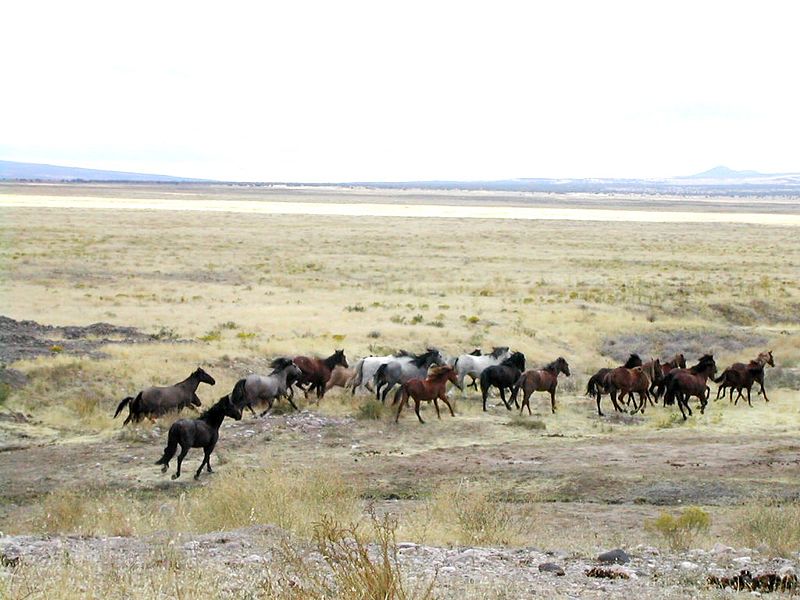
A lot of people don't realize it, but the American west still has herds of wild horses that inhabit portions of the country. It is estimated that about 37,000 of the animals still roam the west today and these strong, sturdy creatures are uniquely adapted to their environment. That makes them a particularly good choice for a new equestrian expedition that is set to get underway on March 15th. That is when a group of four riders will set out on a 3000-mile long odyssey that will form the basis of a new documentary entitled Unbranded.
In few short weeks, riders Ben Masters, Thomas Glover, Ben Thamer and Jonny Fitzsimons will embark on their adventure, starting at the border of Mexico and heading north. Their route will take them more than six months to complete, crossing through Arizona, Utah, Idaho, Wyoming and Montana before finishing at the Canadian border. Along the way they'll pass through such amazing locations at the Grand Canyon, Yellowstone and Glacier National Park.
The four men will ride this trail with 17 horses, each of which were previously wild mustangs. Their journey wouldn't be possible without these amazing animals and the film that they will shoot will be a testament to the partnership between rider and horse. Through this film they hope to not only recapture the spirit of adventure in the Old West but also share with viewers the story of these wild mustangs, many of which are available for adoption to those looking to add a high-quality horse to their stable, ranch or farm.
The route that the team has elected to follow is a custom one that they've selected themselves in an effort to experience the true back country of the places they'll be visiting along the way. The path will lead along portions of the Arizona Trail, Great Western Trail and the Continental Divide Trail, passing through deserts, canyons, mountains and plains along the way. It should make for a stunning and dramatic backdrop to their adventure.
 In writing this little blog of mine I've been privileged enough to make the acquaintance of a number of amazing men and women who do some incredible things. When I hear from those folks, either by phone or email, I always make sure to give them special attention and listen closely to what they are thinking and planning. One of those people is explorer Mikael Strandberg, a man who has pushed the limits of human endurance on a number of expeditions to far flung corners of the globe. So when I received an email this weekend detailing Mikael's next adventure, you can bet that I read the note with keen interest.
In that email Mikael announced Expedition Extreme Cold, a journey through one of the harshest and bitterly cold environments on the planet. This adventure will take Strandberg deep into the heart of Siberia, where he'll spend time traveling with the Eveny, a group of nomadic reindeer herders who have learned to survive in that beautiful, yet unforgiving place.
Mikael's journey will begin in Oymyako, Siberia – one of the coldest inhabited place on the planet. In Oymyako, the average temperature falls below freezing for seven months of the year and the ground is permanently frozen. In the months that Strandberg will be traveling in the region, temperatures will routinely drop below -60ºC/-76ºF as he makes his way through a wild, mountainous region that few people ever visit.

For my money, the greatest
story of survival in history is that of Sir Ernest Shackleton and the members of
his crew on the Endurance expedition. In a nutshell, Shackleton and his
men sailed for Antarctica where they hoped to make a traverse of the continent.
Upon their arrival, their ship, the Endurance, became trapped in the
pack-ice and the crew became stranded, before losing the vessel eight months
later. Abandoning their ship, the men then set up camp on a floating iceberg,
where the mostly stayed for another five and a half months before loading up
life rafts and setting out for the nearest land. That happened to be Elephant
Island, which took them five days to reach by sea.
Elephant Island was
the firs solid ground they stood on for more than 497 days but it was hardly a
hospitable place. Shackleton knew that they couldn't stay there for long and
that he needed to go for help, so after two weeks on the island he and some of
his crew, set off for South Georgia – 800 nautical miles away – in one of the
lifeboats. Two weeks later they reached the remote island where they knew the
could find help, but first they would have to traverse a mountainous region that
had never been crossed before. Shackleton and two of his men hiked 32 miles in
36 hours to get help and eventually they were able to save the men left behind.
Most amazing of all in this tale is that not a single member of the crew lost
their life during this ordeal that lasted more than 18 months.
I'm not
the only one who finds this story fascinating and at the moment there is a team
of adventurous souls who are preparing to reenact a portion of the harrowing
tale. The crew of the Shakleton Epic expedition has spent the past few weeks preparing to take on the challenges
of the Southern Ocean as they follow in the British explorer's footsteps,
sailing in a small boat from Elephant Island to South Georgia and then
traversing the island just as Shackleton and his men did.